AI 101: Using NotebookLM to Support Thoughtful, Responsible Learning
Featured in the Curriculum Corner newsletter
By Dr. Drew Shealy, STEM Director, First Presbyterian Day School
At the beginning of November, I attended the Georgia Educational Technology Conference. The sessions offered practical strategies for implementing AI in the classroom. Among the tools presented, Google NotebookLM stood out as the most valuable.
Google NotebookLM distinguishes itself from general AI tools like ChatGPT through its focused approach. While ChatGPT draws from the vast expanse of the internet, NotebookLM operates within defined boundaries. Users upload specific documents such as class readings, notes, lesson plans, or articles, and the AI generates responses exclusively from those materials. This constraint ensures that information remains personalized, contextually relevant, and directly connected to the curriculum.
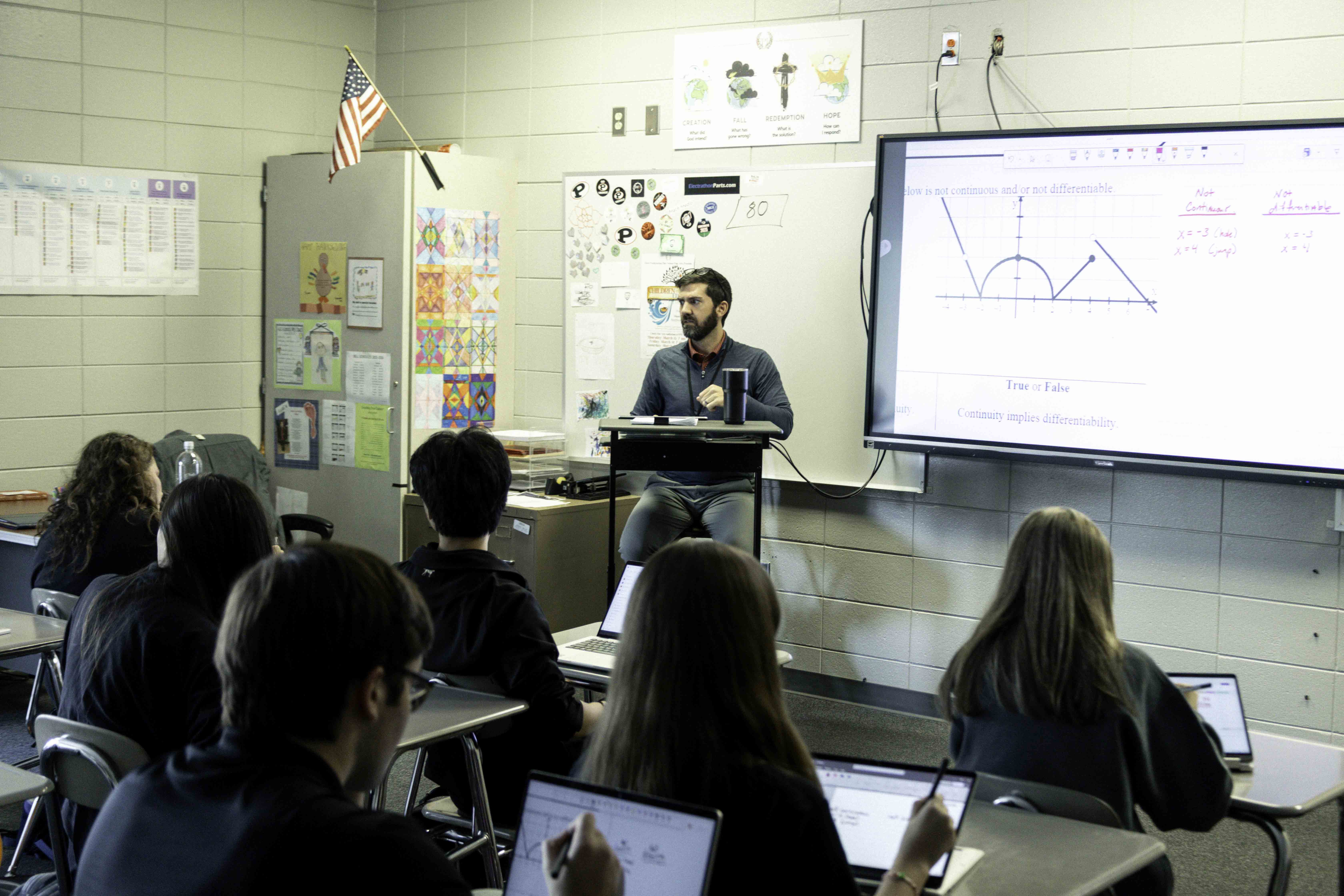
For teachers, NotebookLM offers multiple applications. Educators can upload lesson materials and prompt the AI to generate study guides, simplify complex texts, or develop discussion questions. The tool excels at synthesizing main ideas across multiple documents, streamlining the unit planning process. Essentially, I see it as an organizational assistant that transforms materials into accessible instructional resources.
Students can also benefit from NotebookLM as a review tool. By uploading their notes and readings, they can request clearer explanations of difficult concepts, generate flashcards, or create practice quizzes. This proves especially helpful for students who struggle with dense texts or feel uncertain about what to prioritize when studying. Because the AI works exclusively with their actual course materials, the review content remains accurate and aligned to the curriculum. However, students may become overly reliant on AI-generated summaries, potentially undermining the development of critical notetaking and synthesis skills. When students bypass the cognitive work of organizing information themselves, deeper learning suffers. Teachers must guide students toward balanced use, positioning NotebookLM as a supplement rather than a replacement for independent thinking.
Discovering Google NotebookLM was the conference highlight. Unlike tools that prioritize speed over understanding, NotebookLM emphasizes comprehension and meaningful engagement with course content. When integrated thoughtfully into teaching and learning practices, it has genuine potential to enhance both instruction and learning. Educational technology succeeds when it supports the learning process rather than diminishes it, and NotebookLM, when used with intention, may help.
— Drew Shealy, FPD STEM Director